

Natural Dog Poop Odor Control Tips That Actually Work
Table of Contents
- Why Dog Poop Smells So Bad (and What Actually Neutralizes It)
- Natural Odor Neutralizers for Your Yard
- Diet Changes That Reduce Stool Odor at the Source
- How to Properly Dispose of Dog Waste in Apartments
- Best Dog Poop Bags for Odor Control
- Seasonal Odor Management: Spring Thaw to Summer Heat
- Composting vs. Disposal: What to Do With the Evidence
- Frequently Asked Questions
Last Updated: October 2, 2026
Why Dog Poop Smells So Bad (and What Actually Neutralizes It)
Dog poop odor comes from bacteria in the gut breaking down food and releasing sulfur compounds and other gases. The stronger the digestion, the worse the smell. That's why natural dog poop odor control tips work best when they target both the yard and your dog's gut.
Masking a smell never fixes it. You have to break it down or stop it at the source. This guide covers both.
Below, we'll show you exactly how to kill the smell with pantry staples, adjust your dog's diet, and pick up the mess without making it worse.
Natural Odor Neutralizers for Your Yard
The best natural odor neutralizer for a yard is a mix of white vinegar and water, because the acid drops the pH and creates an environment where odor-producing bacteria struggle, rather than layering fragrance on top of the problem. Baking soda and activated charcoal pull double duty as absorbents for lingering odors.
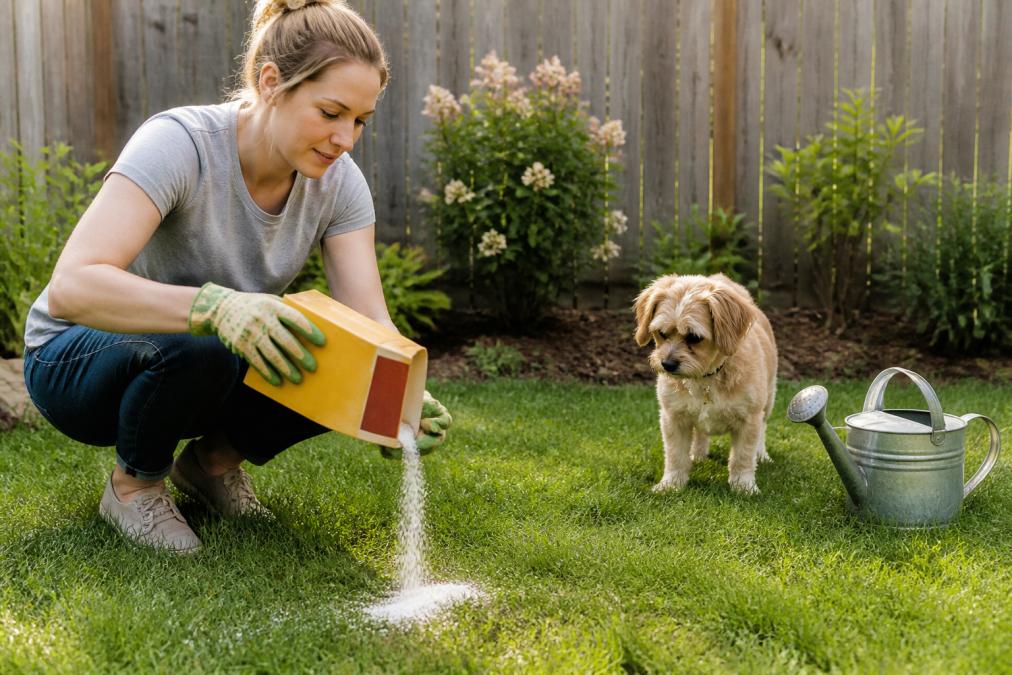
White Vinegar and Water: The Two-Ingredient Workhorse
Mix one part white vinegar with one part water in a spray bottle. Soak the spot, let it sit about 10 minutes, then rinse. The acid neutralizes the odor-producing bacteria in the soil.
- Dilute more in summer. One part vinegar to two parts water is gentler on heat-stressed turf.
- Rinse, don't soak. A quick rinse pushes the acid into the top layer of soil without turning it into a brine.
- Don't spray the whole yard. Spot-treat the piles, not the lawn. Broad-spectrum spraying is what flattens your soil microbiome.
- Re-seed bare patches. Thin grass means more mud, more moisture, and more odor retention.
Baking Soda and Activated Charcoal for Absorption
Sprinkle baking soda over a damp patch and let it dry. It soaks up moisture and odor. Rake it in, then water lightly. Baking soda is a mild alkali, so it also nudges the pH back up after an acid treatment, which is why the two work well as a pair rather than a competition.
The Soil Microbiome Angle Most Guides Miss
Healthy soil is your free, self-replenishing odor-control system. The bacteria and fungi in a living lawn break down waste on their own, they just need the right conditions. That means:
- Leave the clippings. Mulched grass feeds the microbes that do the decomposing.
- Water deeply, less often. Shallow daily watering keeps the surface damp and stinky; deep watering trains roots down and lets the top layer dry.
- Skip the broad-spectrum yard chemicals. If you're spraying for weeds and bugs, you're also spraying the decomposers.
- Aerate in fall. Compacted soil goes anaerobic, and anaerobic soil smells like a swamp.
Diet Changes That Reduce Stool Odor at the Source
What goes in comes out, and it comes out smelling like whatever your dog ate. High-protein diets, table scraps, and sudden food switches all crank up the stink. A slow transition to a balanced food and a steady routine often does more for odor than any spray.
Fiber, Probiotics, and Digestive Enzymes
Fiber firms up stool and helps the gut move food through efficiently. Probiotics add good bacteria that crowd out the odor-producing kind. Digestive enzymes help your dog break food down instead of fermenting it.
- Add a spoonful of plain canned pumpkin for fiber
- Ask your vet about a pet-safe probiotic
- Introduce any new food over 7 to 10 days
- Keep treats consistent to avoid surprises
How to Properly Dispose of Dog Waste in Apartments
Learning how to properly dispose of dog waste in apartments comes down to three things: seal it, contain it, and never let it sit. Odor builds fast in a small space, so the goal is to move waste out of your home before bacteria get to work.
- Bag every pickup immediately, even on a quick walk. A pile in an open bag is a pile off-gassing into your hallway.
- Tie it closed and squeeze the air out before you knot it. Trapped air is trapped smell.
- Use a small, lidded bin, a 1- to 2-gallon step-can with a tight-sealing lid beats a decorative open basket every time.
- Line the bin with a bag, and change the liner daily. The liner is what you're actually washing.
- Empty the bin daily, not weekly. In summer, twice a day if you can.
- Wipe the bin with vinegar and water once a week, then let it air-dry with the lid open.
Bin Mechanics: Why Small Spaces Smell Worse
Odor isn't just about the waste, it's about the container. A few things make apartment bins stink faster than they should:
- Warm plastic holds odor. A bin sitting next to a radiator or in a sunny window bakes the smell into the plastic itself.
- A loose lid is worse than no lid. It lets air in and out, which means it pumps smell into the room every time someone walks by.
- Bag-on-bag friction tears liners. If your liner is thin, double-bagging actually increases the chance of a leak. One thick liner beats two flimsy ones.
- Moisture is the enemy. A dry bin smells far less than a damp one. A silica packet or a spoonful of baking soda in the bottom helps.
The Composting Question
Most apartment guides tell you to just toss it. That's fine, but it skips a real option: dedicated pet-waste composting. It's not the same as a kitchen scrap bin, dog waste can carry parasites that survive in a standard compost pile, so it needs a sealed unit that reaches high heat. That's a tough sell in an apartment, but some buildings with community compost programs now accept pet waste in a separate stream.
Best Dog Poop Bags for Odor Control
The best dog poop bags for odor control are thick, leak-resistant, and seal tight, because a thin bag that tears or leaks defeats the whole point.
| What Matters | Why It Helps With Odor |
|---|---|
| 20-micron thickness | Won't tear or leak on the walk |
| Easy-open design | Faster pickup means less sitting time |
| Leak-resistant seal | Keeps smell inside the bag |
| Light lavender option | Takes the edge off without overpowering |
| Plant-based materials | Helps reduce reliance on traditional plastics |
Seasonal Odor Management: Spring Thaw to Summer Heat
Odor problems shift with the seasons, and most people treat them the same all year. That's a mistake. Spring thaw wakes up a winter's worth of frozen waste, while summer heat cooks bacteria into overdrive.
Composting vs. Disposal: What to Do With the Evidence
Composting dog waste is possible, but it's not the same as tossing scraps in a backyard bin. Dog poop can carry parasites that survive in a standard compost pile, so it needs a dedicated system and high heat to break down safely.
Here's the honest breakdown:
- Standard backyard compost: Not safe for dog waste. It doesn't get hot enough.
- Dedicated pet-waste composter: A sealed unit that reaches high temps. Works, but takes space and upkeep.
- Municipal trash: The simple, reliable choice for most people.
- Flushable claims: Check local rules first. Many sewer systems can't handle it.
Frequently Asked Questions
How do I make my dog's poop less smelly?
Start with digestion. A consistent diet with adequate fiber, plus probiotics or digestive enzymes, can support healthier gut function and firmer stool, which usually means less odor. Avoid sudden food changes and too many table scraps, since both can throw digestion off. If stool is consistently loose or unusually foul, talk to your vet. Better digestion plus prompt cleanup is the one-two punch that keeps dog poop odor from taking over your yard.
What is a good odor eliminator for dog poop in the yard?
White vinegar mixed with water is a cheap, effective option for spraying down spots where waste sat. Baking soda works well for absorbing lingering smells on patios and in bins, and activated charcoal is a solid choice for enclosed spaces. For daily walks, a thick, leak-resistant bag keeps odor contained before it ever hits your nose. Pick up waste promptly, since the longer it sits, the deeper the smell settles into soil and grass.
How can I keep my dog waste bin from smelling?
Line the bin with a sturdy bag, add a layer of baking soda or a pet-safe deodorizing tab at the bottom, and empty it often. If you live in an apartment, double-bagging and sealing each pickup before it goes in the bin makes a real difference. Keep the bin out of direct sun, since heat speeds up odor-producing bacteria. A quick rinse with white vinegar and water every week keeps the plastic itself from holding onto smells.
Are there natural ways to neutralize pet waste odors in the yard?
Yes. Watering the lawn after pickup dilutes residue, while white vinegar spray and baking soda handle surface odors. Good air circulation and regular lawn maintenance, like raking and mowing, help soil dry out and cut down on moisture where odor-causing bacteria thrive. For repeat offenders, an enzymatic cleaner designed for pet waste breaks down residue at a deeper level. None of these replace prompt pickup, which remains the single most effective step.
Dog poop odor is a two-front battle: the mess in your yard and the mess in the bag. Handle both, and the smell stops being a problem. Hey Stinky makes the second half easy with thick, leak-resistant, easy-open bags made with plant-based materials, plus a light lavender option that takes the edge off. Every box supports service and therapy dogs, so your least favorite chore does a little good. Get started with Hey Stinky and make pickup a little less gross and a lot more fun.