

How to Properly Dispose of Dog Waste in Apartments
Table of Contents
- Why Dog Waste in Apartments Is a Bigger Deal Than You Think
- Apartment Pet Waste Rules: What Your Lease and HOA Actually Require
- Step-by-Step: How to Properly Dispose of Dog Waste in Apartments
- The Best Odor Control for Dog Poop in Small Spaces
- Pet Waste Disposal Etiquette Every Apartment Dog Owner Should Know
- Can You Flush Dog Poop or Compost It in an Apartment?
- Conclusion
- Frequently Asked Questions
Last Updated: September 13, 2026
Why Dog Waste in Apartments Is a Bigger Deal Than You Think
Learning how to properly dispose of dog waste in apartments is about more than being a good neighbor. It is about protecting shared spaces, dodging fines, and keeping your hallway from smelling like a kennel. Same three problems every time: no yard, no private trash can, and a landlord who is watching.
Most guides get this wrong: they treat apartment disposal like a suburban chore with a longer walk. It is not. You are managing odor in a sealed box, timing trash runs around a shared dumpster, and hoping your bag does not fail in a stairwell at 6 a.m.
Below: how to handle dog waste in apartments, from lease rules to odor control to the one disposal method that will destroy your plumbing.
Apartment Pet Waste Rules: What Your Lease and HOA Actually Require
Most leases do not ban dogs. They ban the mess dogs leave behind, and they spell out where that mess goes. No two buildings write it the same way, so read your own paperwork instead of trusting your neighbor.
Where to Find Your Building's Specific Pet Waste Policy
Your pet policy usually lives in one of three places: the pet addendum to your lease, the building's rules and regulations document, or a separate HOA handbook if you own your unit. If you cannot find it, ask the leasing office in writing and keep the reply. A written answer is your best defense if a neighbor ever disputes what you did.
Common requirements you will see include:
- Immediate pickup on all common grounds
- Use of a bag at all times, even for small dogs
- Disposal only in designated outdoor receptacles
- No leaving bagged waste in hallways, stairwells, or on balconies
- A specific pet waste disposal area, often near the dumpster
Your Lease-Compliance Checklist (Run This Before You Get a Fine)
Before you sign or renew, walk through this list and write down the answers. Ten minutes now saves a lot of awkward emails later.
- Find the pet addendum. Confirm it is attached to your lease and not just mentioned in it.
- Highlight the disposal clause. Note the exact words used for where waste may go.
- Check for a designated relief area. Some buildings require dogs to use one specific spot.
- Look for a DNA registry clause. Many larger complexes now require a cheek swab at move-in so unbagged piles can be traced back to a specific dog.
- Note quiet hours. Some buildings restrict dumpster use overnight because the lid slams.
- Ask about the guest policy. If your dog walker or a visiting friend handles pickup, they are bound by the same rules.
- Confirm the fine schedule in writing. Ask what happens on a first, second, and third violation so there are no surprises.
- Save the leasing office email. If a complaint ever lands on you, you want a paper trail.
If your building uses a pet waste DNA registry, an unbagged pile can be matched to your dog. Real consequence, not a bluff, one more reason to carry a bag you trust.
Common Lease Violations That Cost Dog Owners Money
The violations that get dog owners fined are rarely dramatic. They are small, repeated, and visible.
- Bag left on the ground near the building entrance
- Waste tossed into a recycling bin instead of trash
- Poop bag dropped in a hallway trash can, which then smells for days
- Dog off-leash in a designated relief area
- Repeated complaints from neighbors about odor in a shared space
Step-by-Step: How to Properly Dispose of Dog Waste in Apartments
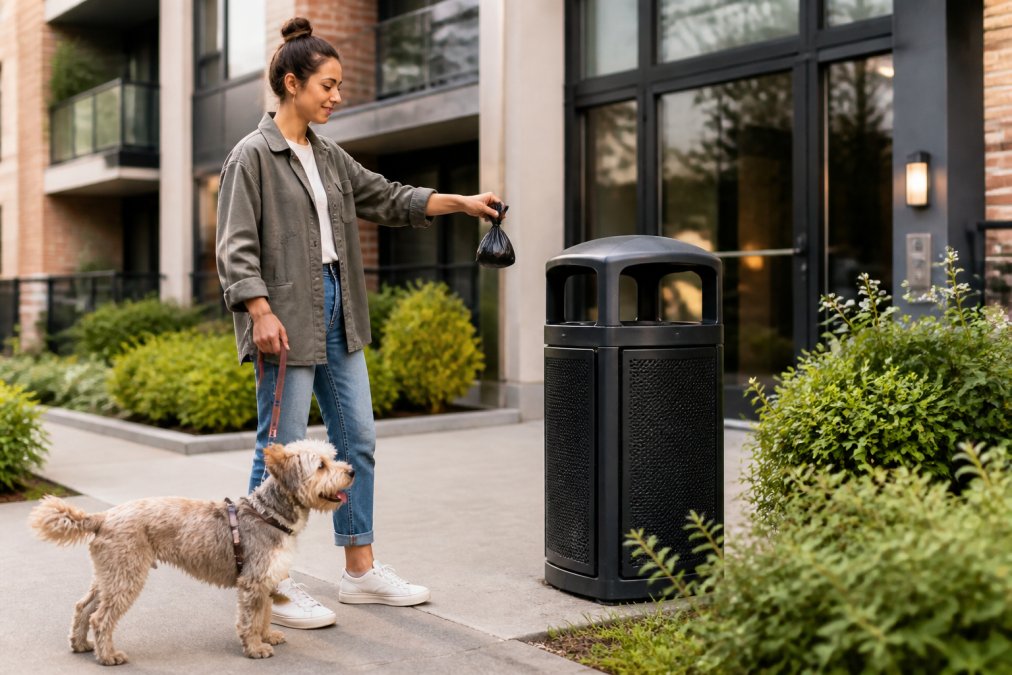
Here is the routine that works when you have no yard, no garage, and no patience. Total time: under two minutes.
Step 1: Scoop and Bag It Without the Fumble [Time: 20 seconds]
Turn the bag inside out over your hand like a glove, grab the pile, flip it back, and tie. Clean hand, sealed bag, one motion.
Cheap bags fail at the worst moment: mid-tie, in the cold, with a dog pulling. A thicker bag with an easy-open edge solves most of this. Hey Stinky bags are 20 microns thick and separate without the licking-your-fingers routine, which matters when you're wearing gloves.

Step 2: Transport It Without Traumatizing Your Neighbors [Time: 30 seconds]
Carry the tied bag by the knot, not the body. A sealed knot keeps odor in and stops leaks from reaching your hand or coat pocket.
If you have more than one dog, tie each bag separately. One giant bag of combined waste is heavier, more likely to tear, and much worse if it does.
Step 3: Dispose in the Right Bin at the Right Time [Time: 45 seconds]
Put the tied bag in an outdoor trash receptacle, ideally the dumpster or a designated pet waste bin. Never flush it, never toss it in recycling, and never leave it in an indoor hallway can.
If your building only has indoor trash chutes, double-bag before you drop it. The chute is a shared space, and a single thin bag will announce itself to the whole floor.
Step |
Time |
What to Avoid |
|---|---|---|
Scoop and bag |
20 seconds |
Thin bags that tear mid-tie |
Transport |
30 seconds |
Carrying by the bag body |
Dispose |
45 seconds |
Recycling bins, indoor cans, toilets |
The Best Odor Control for Dog Poop in Small Spaces
The best odor control for dog poop in a small apartment comes down to four things: a sealed container, cold storage, a carbon or charcoal layer, and fast removal. Odor is a gas, and gas escapes anything that is not airtight.
Build a Two-Stage System, Not Just a Bin
The mistake most people make is treating one container as the whole solution. A better setup has two stages:
- Stage one, the walk container. A small, hard-sided, gasket-sealed caddy that lives by your door. Line it with a bag, drop the tied poop bag in, snap the lid. This is what stops the smell from reaching your entryway between walks.
- Stage two, the transfer container. A larger sealed bin on your balcony, in a closed closet, or in a garage if you have one. Empty stage one into it at the end of the day, then take stage two to the dumpster on your next trip out.
Two stages beat one because you are not opening long-term storage after every walk. Every lid-open releases a puff of odor. Fewer opens, less smell.
Charcoal, Baking Soda, and the Cold-Storage Trick
A plain sealed bin buys you time. A sealed bin with an odor-absorbing layer buys you a lot more.
- Activated charcoal filters. Many pet-waste caddies and diaper pails sold for this exact purpose use a replaceable carbon filter in the lid. The carbon traps odor molecules instead of just containing them. Replace the filter on the schedule the manufacturer recommends, because a saturated filter stops working and starts smelling.
- Baking soda. Sprinkle a thin layer in the bottom of your sealed container before you line it. It absorbs moisture and odor between empties, and it costs almost nothing. Refresh it every time you change the liner.
- Cold storage. The freezer trick sounds ridiculous until you try it. If you walk your dog late at night and cannot get to the dumpster until morning, double-bag the waste and freeze it. Cold slows the bacteria that create the smell. Just label the container so no one mistakes it for leftovers. If the freezer feels like a step too far, a sealed bin on a cold balcony does some of the same work in winter.
Shared Trash Areas: How to Not Be That Neighbor
Odor control does not stop at your front door. The shared trash room, dumpster, and hallway all become complaint magnets if you are careless.
- Time your dumpster runs. If your building has quiet hours, respect them. A slamming lid at 11 p.m. is a noise complaint waiting to happen.
- Double-bag before the chute or shared can. A single thin bag will announce itself to the whole floor. A second bag is cheap insurance.
- Never leave a bag in a hallway can. Hallway cans are usually emptied on a schedule, not daily. A bag of dog waste in there for two days is a problem for everyone.
- Wipe the caddy, not just the bag. A quick wipe of your walk caddy with a disinfecting wipe once a week keeps residue from building up.
A lightly scented bag helps too. Hey Stinky's lavender option takes the edge off without smelling like a candle shop, which matters when your "trash room" is also your hallway closet. Our 20-micron thickness, easy-open edge, and leak-resistant seal keep the smell where it belongs: in the bag, not on your hand.

Pet Waste Disposal Etiquette Every Apartment Dog Owner Should Know
Good pet waste disposal etiquette in a shared building is mostly about other people's noses and schedules. You are not just cleaning up after your dog. You are managing a relationship with everyone on your floor.
- Pick up immediately, even in rain, snow, or darkness
- Carry spare bags, because the one time you forget is the time it matters
- Never leave a bag on a neighbor's stoop or by the elevator
- Avoid the dumpster run during quiet hours if the lid slams
- If your bag tears, go back and clean the spot
A common mistake is assuming a small dog's waste is not a big deal. It smells the same to your neighbor, and the rules apply the same way.
Can You Flush Dog Poop or Compost It in an Apartment?
Short answer: flushing is risky and composting is possible but demanding. Neither is the easy win people hope for.
Flushing Dog Waste: When It Works and When It Wrecks Your Pipes
Flushing dog waste is only safe if you are on a municipal sewer system, you pick up the solid waste first, and you never flush the bag. Dog waste can carry pathogens and parasites that water treatment plants are not designed to handle, and the EPA guidance on animal waste and water quality treats pet waste as a pollutant that can reach waterways through stormwater runoff.
If you are on a septic system, do not flush it. You are adding solid load to a system sized for your household, and the repair bill is not worth the convenience.
Small-Space Composting: A Realistic How-To for Apartment Dwellers
Composting dog waste in an apartment is possible, but it is not the same as tossing apple cores in a countertop bin. Dog waste can contain bacteria and parasites harmful to humans, so it needs a dedicated system, not your vegetable compost.
A realistic small-space approach:
- Use a dedicated, sealed pet waste composter or bokashi-style bucket, never a food composter
- Add a carbon source like sawdust or shredded cardboard with each addition
- Keep it on a balcony or in a sealed closet, never in a living space
- Do not use the finished material on anything you will eat
- Check your lease and local rules first, since many buildings prohibit on-site composting
Many apartment dwellers find that a sealed container plus daily disposal is simply easier and safer than composting. If you want the sustainability angle without the risk, look for bags made with plant-based materials and dispose of them properly. Hey Stinky's bags are made with plant-based materials, though they are not compostable, so they still belong in the trash.
Conclusion
The hardest part of dog waste in apartments is not the pickup. It is the logistics: the shared bin, the small space, the neighbor who notices everything. Get a thick, leak-resistant bag you can open with cold hands, seal your waste until you can dispose of it, and follow your building's rules to the letter.
Hey Stinky makes that part easier. Our 120-count bags are 20 microns thick, easy to open, and made with plant-based materials, with unscented and lightly scented options so your hallway stays your hallway. Ten percent of profits support Service & Therapy Dogs, because pickup should do a little good too.
Get started with Hey Stinky and make apartment cleanup the least dramatic part of your dog's day.
Frequently Asked Questions
Is it okay to flush dog waste down the toilet?
It depends on your plumbing and local rules. Dog waste can contain bacteria and parasites that may survive standard wastewater treatment, and some municipal guidelines advise against flushing it. If you do flush, only flush the waste itself, never the bag. In most apartment buildings, the safer move is to bag it and place it in a designated trash bin. Check your building's pet waste rules before making flushing a habit.
What are common apartment pet waste rules I should know?
Most apartment pet waste rules require you to immediately pick up after your dog, use a sealed bag, and dispose of waste only in designated trash areas, never in recycling bins or storm drains. Many leases also specify fines for leaving waste on sidewalks, in hallways, or near building entrances. Some buildings require waste to be double-bagged or placed in a specific outdoor receptacle. Review your lease and HOA documents so you know exactly what applies to you.
How do I keep my apartment from smelling like a kennel?
The best odor control for dog poop starts with sealing waste in a thick, leak-resistant bag immediately after pickup. Store full bags in a sealed container with a tight-fitting lid, and empty it daily. For extra protection, keep the container near a window or on a balcony if your lease allows. Lightly scented bags can help mask lingering smells during transport. Regular cleaning of the container with pet-safe disinfectant also cuts down on odor buildup between trash days.
Can I throw dog poop bags in the building's recycling bin?
No. Dog waste bags belong in the trash, never the recycling bin. Recycling facilities cannot process bags containing fecal matter, and contaminated recycling can cause an entire batch to be diverted to a landfill. Pet waste disposal etiquette means using the correct bin every time. If your building has a designated pet waste station, use it. Otherwise, place tied bags in your unit's trash or the building's regular garbage receptacle.