

Benefits of Using Plastic-Free Pet Products
Table of Contents
- Why Plastic-Free Pet Products Matter More Than You Think
- The Environmental Impact: What Happens to Plastic Pet Waste
- Pet Safety and Health Benefits of Eco-Friendly Pet Products
- Plastic-Free Dog Toys and Durable Alternatives That Last
- Sustainable Pet Products: Materials That Actually Work
- Plant-Based Dog Poop Bags: Strength Without the Guilt
- Making the Switch: Practical Steps to a Plastic-Free Routine
- Frequently Asked Questions
Last Updated: October 10, 2026
Why Plastic-Free Pet Products Matter More Than You Think
Dog owners face a choice every single day: grab whatever poop bags are on sale, or invest in something better. The benefits of using plastic-free pet products extend far beyond the walk itself. When you choose plant-based alternatives, you're making a decision that affects your dog's safety, your wallet over time, and the planet your pup will inherit.
At Hey Stinky, we've watched dog owners wrestle with guilt over single-use plastic waste while simultaneously needing bags that actually work. That tension is real. Traditional plastic bags take hundreds of years to break down. Plant-based alternatives offer strength and durability. The difference isn't subtle, it's the kind of practical choice that compounds over months and years of daily walks.
Here's what makes this shift worth your attention: plastic-free pet products aren't a compromise on performance. They're an upgrade.
The Environmental Impact: What Happens to Plastic Pet Waste
Every plastic poop bag your dog uses ends up somewhere. Most of them land in landfills, where they sit for centuries. Some make it to oceans, where they fragment into microplastics that harm marine life and eventually cycle back into ecosystems, and food chains.
The scale matters. A single dog owner using traditional plastic bags generates roughly 1,400 bags per year. Multiply that across millions of dogs, and you're looking at billions of plastic bags entering the waste stream annually. That's not a small problem.
Switching to plastic-free pet products reduces your household's contribution to that pile. Plant-based materials can break down more readily than conventional plastics. They don't persist for centuries like conventional plastics. This isn't marketing language, it's basic material science. When you choose eco-friendly pet products, you're opting out of the perpetual waste cycle.
EPA's guidance on reducing plastic waste
The ripple effects extend beyond landfills. Manufacturing traditional plastic bags consumes fossil fuels and generates carbon emissions. Plant-based alternatives typically require fewer resources to produce.
Pet Safety and Health Benefits of Eco-Friendly Pet Products
Your dog doesn't care about the environment. Your dog cares about safety. Here's where eco-friendly pet products become personal: the material your dog interacts with daily matters for their health.
Microplastic ingestion from conventional toys: Dogs that chew plastic toys ingest small plastic particles over time. The long-term health effects of microplastic ingestion in dogs aren't yet fully studied, but the concern is real enough that veterinarians increasingly recommend avoiding plastic toys for heavy chewers. Plastic-free toys made from natural rubber, hemp, or untreated wood can help reduce that exposure. If your dog is a serious chewer, this isn't a marketing angle, it's a practical safety upgrade.
Chemical additives in conventional products: Many plastic pet products contain chemical additives like phthalates (used for flexibility) and BPA (used for hardness). These chemicals can leach into soil and groundwater, especially in landfills. While the direct health risk to your dog from touching a plastic bag is low, reducing unnecessary chemical exposure is a reasonable precaution. Plant-based alternatives don't require those additives, so they don't introduce that risk into your dog's environment.
Off-gassing and residue: Conventional plastic bags and toys can off-gas volatile organic compounds (VOCs), especially when new or exposed to heat. Dogs spend hours on the ground, sniffing, rolling, digging. They ingest dirt, grass, and whatever residue lingers from previous walks. Reducing chemical exposure matters, even if the risk from a single bag is minimal. Over months and years of daily walks, choosing materials that don't off-gas or leave chemical residue is a cumulative health choice.
Durability as a safety factor: A bag that tears mid-walk isn't just inconvenient, it's a hygiene problem. Weak bags create messes that attract pests, spread bacteria, and expose other dogs in your neighborhood to pathogens. The best plastic-free alternatives are engineered for strength. They're thicker, more puncture-resistant, and less likely to fail when you need them most. That reliability translates to better hygiene during walks and cleaner outdoor spaces.
What the evidence actually shows: Veterinary literature doesn't yet establish that plastic-free products prevent specific diseases or conditions in dogs. The safety argument rests on reducing unnecessary chemical exposure and microplastic ingestion, reasonable precautions, not proven cures. If your dog has a specific health condition, talk to your veterinarian about material choices. For most dogs, plastic-free products are a sensible way to minimize low-level chemical exposure without compromising performance.
Plastic-Free Dog Toys and Durable Alternatives That Last
Dog toys are where the plastic-free shift gets interesting. Conventional rubber and plastic toys shed microplastics as dogs chew them. Over weeks and months, your dog ingests tiny plastic particles. Plastic-free dog toys made from natural rubber, hemp, or untreated wood eliminate that exposure.
The durability advantage is real too. A toy that lasts six months costs less than buying four cheaper toys that fall apart in six weeks. Durable alternatives reduce waste and save money simultaneously. Your dog gets safer play materials, and your trash can gets lighter.
Look for toys made from natural, non-toxic materials. Avoid anything with synthetic dyes or chemical coatings. The best plastic-free dog toys are simple: solid rubber, rope, or wood with minimal processing. They satisfy chewing instincts without the chemical load.
Sustainable Pet Products: Materials That Actually Work
Not all plant-based materials perform equally. The best sustainable pet products use materials chosen for specific properties: strength, flexibility, water resistance, durability, and, critically, what happens to them after your dog is done with them.
Plant-based plastics (bioplastics) derived from corn or sugarcane offer genuine advantages. They're designed to break down faster than conventional plastics and require fewer fossil fuels to produce. However, 'biodegradable' doesn't mean they'll vanish in your backyard. Most require industrial composting facilities to break down properly, and those facilities aren't available everywhere. Check whether your local waste authority accepts plant-based plastics in curbside compost or if you'd need to send them to a commercial facility. This distinction matters: a bag marketed as 'biodegradable' sitting in a landfill behaves like regular plastic.
Natural rubber provides flexibility and puncture resistance without microplastic shedding. It's washable, long-lasting, and can be recycled through specialty rubber-recycling programs in some regions, though availability varies by location. The trade-off: natural rubber requires proper sourcing to avoid contributing to deforestation, so look for certifications or supplier transparency.
Organic cotton works well for toys and accessories because it's washable, safe if ingested in small amounts, and compostable at home or through municipal programs. The limitation: it's less durable for aggressive chewers and wears out faster than rubber or wood, meaning more frequent replacement.
Untreated wood appeals to dogs' natural instincts and is fully compostable. The catch: poor finishing or splinter risk can create safety issues, and wood toys need regular inspection. They're best for supervised play rather than unsupervised chewing.
Here's the practical reality: sustainable pet products succeed when material choice matches both the job and your local waste infrastructure. A poop bag needs thickness and puncture resistance, plant-based materials deliver both. A toy needs safety and durability, natural rubber excels there. But a toy made from a material you can't actually compost or recycle in your area isn't truly sustainable, it's just slower-degrading plastic.
| Material | Best For | Key Strength | End-of-Life Reality | Consideration |
|---|---|---|---|---|
| Plant-based plastic | Poop bags, waste | Thickness & puncture resistance | Requires industrial composting (check local availability) | Performance matches conventional plastic |
| Natural rubber | Toys, chew items | Flexibility & durability | Specialty rubber recycling (limited availability) | Requires ethical sourcing verification |
| Organic cotton | Toys, accessories | Safety & washability | Home or municipal compost | Less durable for heavy chewers |
| Untreated wood | Toys, sticks | Natural appeal & compostability | Home compost or yard waste | Splinter risk if poorly finished; inspect regularly |
The plastic-free versus recycled-plastic distinction: Many "eco-friendly" pet products are made from recycled plastic, old bottles and bags turned into new toys. That's better than virgin plastic, but it's not plastic-free. Recycled plastic still sheds microplastics as dogs chew, and it still ends up in landfills eventually. True plastic-free products avoid plastic entirely, using natural materials instead. When you're shopping, check the material description. "Made from recycled plastic" and "plastic-free" are not the same thing.
Plant-Based Dog Poop Bags: Strength Without the Guilt
Plant-based dog poop bags are the practical heart of this conversation. They do one job exceptionally well: contain waste safely and reliably.
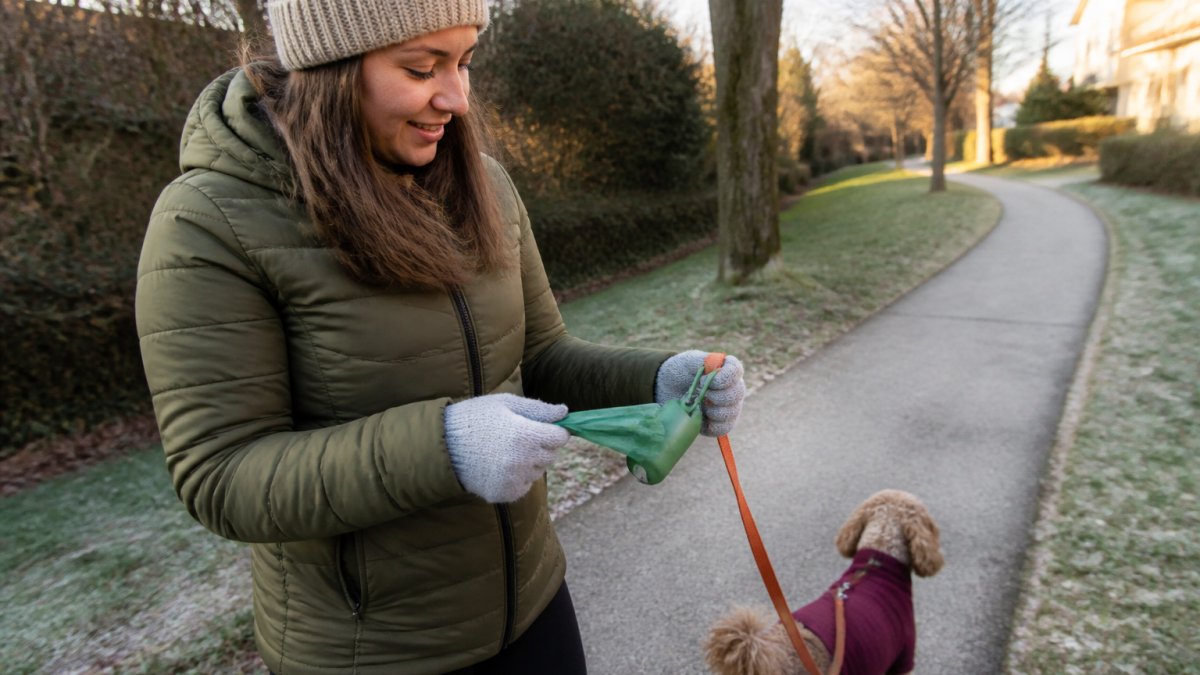
The best plant-based options are engineered to match or exceed conventional plastic performance. They're thick enough to resist punctures, flexible enough to handle awkward shapes, and strong enough to withstand the weight of waste without tearing. The Deuce Has Landed, Unscented Dog Poop Bags and Pardon My Lavender Scented Pile, Lavender Dog Poop Bags are engineered with 20-micron thickness and an easy-open edge design, features that matter during morning walks in winter when you're wearing gloves and your dog won't stand still.


Plant-based materials don't sacrifice performance for environmental benefit. They deliver both. A bag that tears on the sidewalk isn't sustainable, it creates mess and defeats the purpose.
Making the Switch: Practical Steps to a Plastic-Free Routine
Switching to plastic-free pet products doesn't require overhauling your entire routine. Start with one change: swap your poop bags.
Pick a brand that prioritizes strength and ease of use. Shop all Hey Stinky dog poop bags for options designed for real-world conditions, cold weather, gloved hands, big dogs, and multiple daily walks. They're not a compromise. They're an upgrade.
Once you've settled into using better bags, expand gradually. Replace worn-out toys with natural alternatives. Choose pet accessories made from sustainable materials. Shift your purchases toward brands that prioritize durability and environmental responsibility. Small changes compound.
Keep your expectations realistic. Switching to plastic-free pet products doesn't make you perfect. It makes you thoughtful. You're reducing harm, not eliminating it.
Making the shift to plastic-free pet products is one of the most practical decisions a dog owner can make. It's not about guilt or ideology, it's about choosing products that work better while reducing unnecessary waste. Hey Stinky's plant-based poop bags deliver the strength and reliability you need for daily walks, with 20-micron thickness and an easy-open design that works even with winter gloves. Every box supports Service & Therapy Dogs, turning routine cleanups into something that matters. Start with better bags, and the rest follows naturally.
Frequently Asked Questions
Are plastic-free pet products actually stronger and less likely to tear?
Yes. Plant-based materials in quality plastic-free pet products are engineered for durability. Bags made with plant-based materials at 20 microns thick (like those from Hey Stinky) provide the same tear resistance as conventional plastic while remaining leakproof. The difference is the material origin, not the performance. Real customer feedback confirms they hold up to daily wear without ripping.
What's the difference between plastic-free and recycled-plastic pet products?
Plastic-free products use materials like plant-based polymers or natural fibers, they contain zero plastic from any source. Recycled-plastic products use plastic that's been processed from waste but are still plastic. For reducing new plastic production, plastic-free is a strong choice. However, both beat single-use virgin plastic bags.
Do plant-based dog poop bags actually mask odors, or is that marketing?
Scent effectiveness depends on the product. Unscented bags rely on thickness and seal quality to contain odors; lightly scented options (like lavender) add a pleasant layer on top. Scent won't eliminate strong odors entirely, but it helps. The primary odor control comes from the bag's seal and material density, not fragrance alone.
How do I know if eco-friendly pet products are worth the extra cost?
Compare durability and lifespan, not just price per unit. Plastic-free bags that don't tear mean fewer replacements over time, lowering your total cost. You're also supporting brands that give back, Hey Stinky donates 10% of profits to Service & Therapy Dogs. The value extends beyond the bag itself.